Project Overview
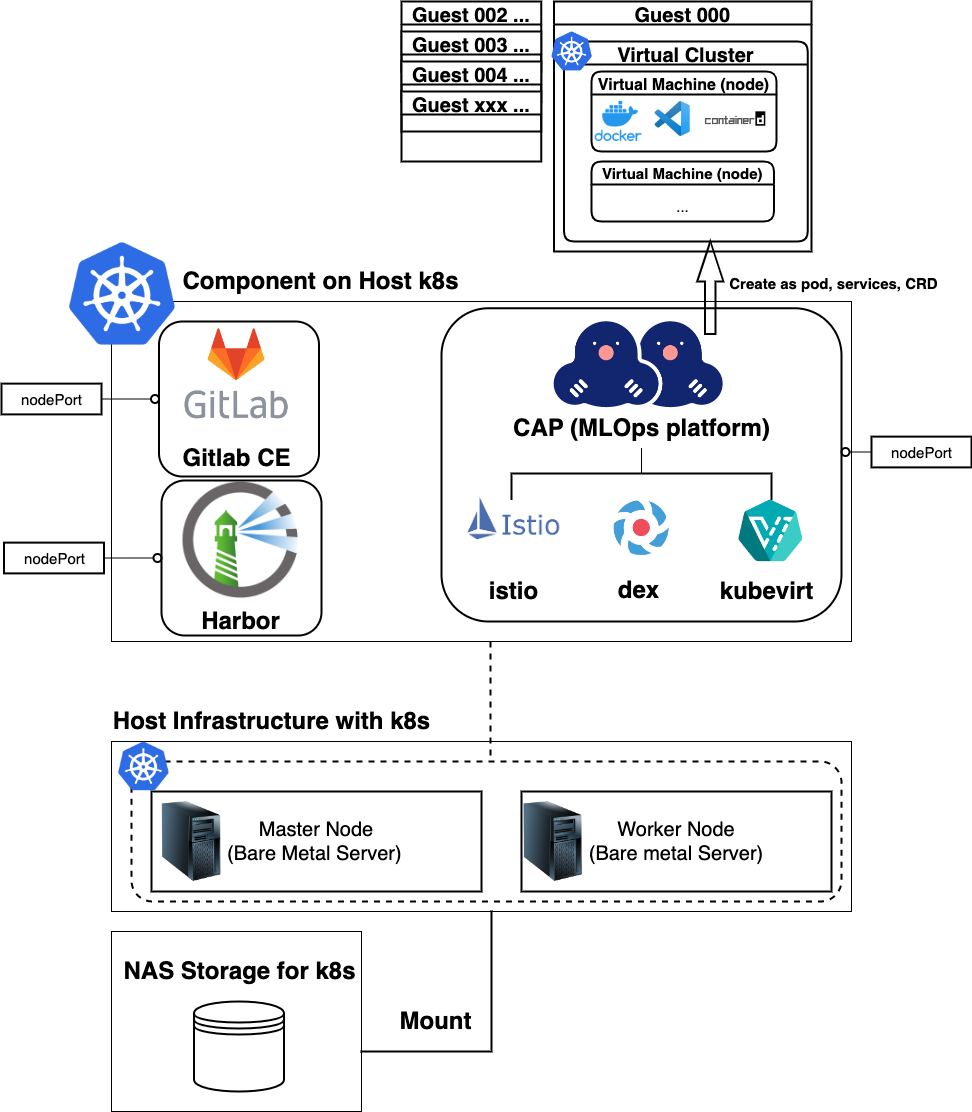
Designed and implemented a comprehensive training platform for engineers at a financial-sector client to learn DevOps principles, focusing on Docker and Kubernetes within a closed network environment. Using the architecture depicted above, I developed a hands-on learning environment to demonstrate the practicality of MLOps and CI/CD pipelines even in restricted settings.
Key Responsibilities
- Platform Design and Deployment: Architected the training platform leveraging Kubernetes, KubeVirt, Istio, Dex, and Harbor to provide virtualized and isolated environments for each participant.
- Environment Provisioning: Prepared Kubernetes clusters capable of supporting 25 simultaneous users, each with their own practical workspace.
- Hands-On Training: Developed and delivered instructional materials covering Docker and Kubernetes fundamentals, including step-by-step guides for deploying CI/CD pipelines in closed networks.
- Closed-Network MLOps Integration: Demonstrated the feasibility of building fully operational MLOps workflows and CI/CD systems in isolated environments.
Achievements
- Participant Engagement: Delivered an interactive training experience where all participants successfully deployed and managed Kubernetes workloads independently.
- Positive Feedback: Achieved over 80% satisfaction ratings in feedback surveys, with participants praising the practical focus and effectiveness of the training materials.
- Client Recognition: Highlighted as a key contributor in enabling MLOps and CI/CD capabilities in closed networks, earning appreciation and requests for future training sessions.
Key Learnings and Insights
This project was a unique opportunity to design, implement, and teach a DevOps and MLOps training platform in a closed-network environment, enhancing both my technical expertise and instructional skills.
- Implementing DevOps & MLOps in Isolated Environments
- Successfully utilized KubeVirt to simulate virtualized Kubernetes clusters, allowing engineers to practice real-world DevOps workflows even without internet access.
- Demonstrated the feasibility of building and running CI/CD pipelines and MLOps workflows in a fully restricted setting.
- Bridging Technical Expertise with Teaching
- Developed a structured, hands-on training program, helping engineers grasp Kubernetes, Docker, and CI/CD fundamentals with real-world applications.
- Conducted interactive workshops, refining my ability to break down complex concepts and adapt my explanations based on participant needs.
- Gaining Confidence in Teaching & Communication
- Through participant feedback and live training sessions, I improved my instructional delivery, engagement strategies, and adaptability in a classroom setting.
- Recognized my ability to teach technical concepts effectively, opening future opportunities for mentorship, technical training, or even academic teaching.
- Understanding the Value of Knowledge Sharing
- Found genuine enjoyment in teaching and sharing knowledge, reinforcing my ability to rapidly learn new skills and translate them into practical, digestible content.
- The overwhelmingly positive participant feedback and client recognition solidified my belief in the importance of well-structured, hands-on technical education.
This project expanded my perspective on teaching, mentorship, and DevOps/MLOps training while reinforcing my technical leadership skills in designing scalable, real-world learning environments.